Alessandro Lusiani explains the success of Milanese armor through the system that produced it, from the supply of iron to the organization of specialized urban workshops. Demand from military customers encouraged coordinated production, while water transport and guild oversight helped connect materials, labor, and finished equipment. The article then examines the design of the armor itself. Curved surfaces, differences in thickness, and treatment of the metal shaped how a harness absorbed or deflected the weapons encountered in combat. Comparison with other armor styles shows that appearance and protection could develop together rather than serving separate purposes. Lusiani argues that Milan’s reputation rested on an interaction between industrial organization and technical experimentation. The discussion gives readers an account of both the craftsmen’s work and the wider commercial setting, showing how a military object can reveal changes in manufacturing, battlefield practice, and the demand for reliable equipment.
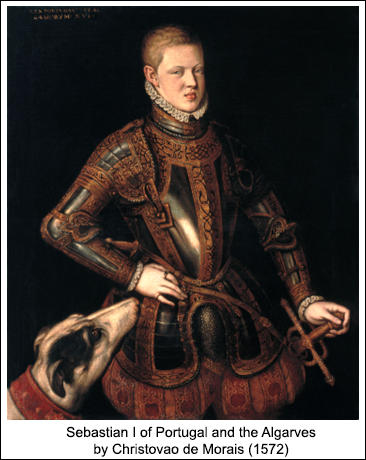
Comer Plummer examines the expedition that brought Portugal’s King Sebastian into battle against rival Moroccan rulers. Political ambitions and personal expectations shaped the campaign before the armies met. Experienced advisers faced the difficulty of influencing a king determined to act on his own conception of command. The account follows the fighting, showing how poor coordination affected the Portuguese while Moroccan leaders exploited their opportunities. Sebastian’s conduct and the experience of soldiers such as Thomas Stukeley give the military narrative a personal dimension. Plummer then considers the disaster’s consequences for the participants and Portugal’s future. The battle becomes a study of how dynastic ambitions, misplaced confidence, and unrealistic expectations can overwhelm practical judgment, with effects extending far beyond the defeat of an army.
A Moroccan expedition’s difficult journey across the Sahara provides the opening problem in Comer Plummer’s account of the conquest of Songhay. Judar Pasha reached the confrontation near Tondibi with a force already strained by distance and losses, facing opponents whose numbers and local position presented a serious challenge. The article explains the military resources available to each side and follows the decisions that shaped the battle. It then examines the occupation of Gao, the search for the wealth that had encouraged the expedition, and the negotiations that followed. Battlefield victory did not remove the difficulties of ruling distant territory or reconcile the expectations of the conquerors with what they found. Plummer connects command, weapons, logistics, and political ambition in a narrative of conquest and disappointment. The account offers readers a view of how a successful expedition could unsettle a regional power while creating new problems for those who had launched it.
Kai Isaksen revisits Pinkie Cleugh as a battle whose military importance exceeded its lasting political results. The English campaign and the Scottish response are placed within the disputes that brought the two kingdoms into renewed conflict. Isaksen follows the preparations, preliminary fighting, and changing options available to the opposing commanders. Infantry, mounted troops, artillery, and support from warships played different but connected roles, allowing the engagement to illustrate the growing importance of coordination among arms. The Scottish position became increasingly difficult as earlier losses and enemy firepower restricted its choices. The article also considers why defeat on the field did not settle the political questions that had motivated the campaign. This combination of tactical narrative and wider context gives readers a way to assess Pinkie’s place in military history, while challenging the assumption that a decisive victory necessarily produces an equally decisive settlement.
The defense of Portugal’s fortified position at Mazagan becomes a test of endurance in Comer Plummer’s account of the Moroccan siege. Political ambitions on both sides establish the stakes before the narrative turns to the garrison, its fortifications, and the resources available to the attackers. Preparations outside the walls developed into an extended contest of artillery, engineering, and attempts to overcome the defenses. The defenders had to sustain resistance while looking toward the possibility of relief, making time and access to support essential parts of the story. Plummer also connects events in Morocco to the Portuguese court, where the young King Sebastian’s interests gave the conflict a broader significance. The article explains why a coastal stronghold could matter far beyond its immediate surroundings. Readers gain a detailed siege narrative and an introduction to the relationship between overseas possessions, royal expectations, and the practical demands of defending an imperial foothold.
Comer Plummer traces Mohammed ash-Shaykh’s rise through the rivalries and shifting alliances of sixteenth-century Morocco. The account connects his personal ambitions to the struggle for political authority, examining how military opportunities and negotiations with foreign powers could strengthen or endanger a ruler’s position. Relations with Portugal form one strand of a larger story that also involves local competitors and pressure from the Ottoman world. Plummer follows the choices made as circumstances changed, showing that apparent partners could pursue aims quite different from those of the Moroccan leader. Descriptions of campaigns and fighting methods reveal the military dimension behind the diplomatic exchanges. The article’s attention to the ruler’s eventual fate gives these calculations a human consequence. Readers receive an account of the making and vulnerability of political power, where negotiation, religious legitimacy, and armed force operated together in a contest extending beyond Morocco’s borders.
Thomas Leckwold examines how Luther’s challenge to church practice became part of a much wider transformation in European society. The Ninety-Five Theses provide the starting point, but the article’s central question is whether the events that followed should be understood as a revolution. Religious conviction interacted with economic grievances, political interests, and disputes over authority, drawing rulers and communities into a confrontation that could not be contained within theological debate. Leckwold follows the escalation of the conflict and the competing pressures facing those expected to enforce or resist reform. He also considers interpretations of revolution and how they apply to the Reformation. The discussion shows why an action’s consequences may extend beyond the intentions of its author. Readers gain a framework for examining the movement from criticism to institutional conflict, and for connecting the religious disputes of the period to the social upheaval and warfare that accompanied them.
Robert C. Daniels investigates why the Muslim invasion of Iberia advanced so rapidly despite the strength that its Christian opponents appeared to possess. The article looks behind the battlefield encounters to the peninsula’s political divisions, earlier history, and the condition of its ruling institutions. It follows the invading forces from their arrival through the collapse of resistance and the occupation of important centers. Decisions by local leaders and the dispersal of authority help explain why numerical strength did not translate into an effective defense. Daniels contrasts this experience with the later confrontation involving the Franks, using the comparison to question simple explanations based on the invaders’ military power alone. Geography and communications add further context to the campaign. The result is an account of conquest that emphasizes the relationship between armies and political cohesion, showing how the ability to organize resistance can be as important as the forces nominally available.
David W. Tschanz follows Cairo’s Citadel through its development as a fortress, a seat of government, and a prominent symbol of authority. Its commanding position made it a military asset, but its importance also came from the rulers who adapted and occupied it. The article traces changes to walls, entrances, palaces, mosques, and supporting facilities, connecting those structures to different periods in the city’s history. Practical requirements of defense and administration existed alongside the desire to express legitimacy and prestige. Architectural details therefore become evidence of political priorities as well as engineering choices. Tschanz also considers how the complex’s functions changed over time and how its surviving features can be understood by present-day visitors. Readers receive a historical tour that brings together military architecture and urban life, revealing how a fortified enclosure could serve as both a protective stronghold and a center from which the surrounding city was governed.