Two Generals: Patton and Eisenhower
By Andrew S. HardingIntroduction
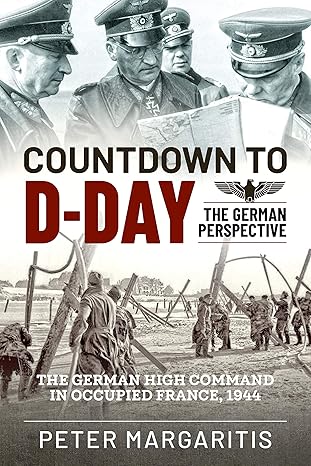
June 6, 1944 General Omar Bradley (1893-1981) led the First Army of the United States in the famous D-Day landing on the beaches of Normandy. Interestingly, Bradley was the understudy of another man, General George S. Patton Jr. (1885-1945). How did Bradley overtake his mentor? What caused the Supreme Allied Commander Dwight D. Eisenhower (1890-1979) to give the job to Bradley when Patton had helped lead the Allies to victory in Sicily only a short time before? During the 1943 invasion, Bradley had served under Patton, now Bradley was Patton's commanding officer.
General Patton was an aggressive general; his tactics were unorthodox, but successful. Why would he not be the commander during the biggest invasion in United States history? Why would he be used as a decoy rather than be on the front lines of Normandy? Was this because of the rocky relationship he had with the Allied Commander, General Eisenhower? How did Patton view Eisenhower and how did Eisenhower view Patton? This story will be unveiled through these men's own words and action and with the help of the views other of men involved in the war.
Through studying primary sources such as the Patton Papers and the Eisenhower Papers , one is able to grasp the relationship between these two men [1]. With the words of Patton and Eisenhower, one is able to understand the relationship through these men's own words, not the interpretation of other historians.
Bradley's book, A General's Life , is the most credible book aside from the papers of Patton and Eisenhower, because he was present at the time.[2] Bradley took rank over Patton in rank and became the commander of the invasion of Normandy, leaving Patton with the Third Army. Bradley had a close personal relationship with both men and many times had to be the neutral person between the two. Bradley had a hard time dealing with that, but knew he had to be balanced between the two if the war was going to work. I was unable to see how Bradley's views affected his outlook on both men. He always tried not to become involved in Patton's and Eisenhower's arguments because sometimes he disagreed with them and had his own views.
The stories of General James "Jimmy" H. Doolittle (1896-1993), Jimmy Doolittle Reminiscences , provided his outlook on how Patton and Eisenhower related [3]. He knew these two during the better times of their lives, and he shows us that through his story. Many of the stories Doolittle told are similar to others, that they two were friends however, just had a difficult work relationship.
The secondary sources tell a different story. They help make certain stories stand out. These people are historians and consequently they are able to make an individual appear a certain way. For instances, if an incident occurs between Patton and Eisenhower, Steven Ambrose (Eisenhower's official biographer) will report the story differently than Martin Blumenson (Patton's biographer). Furthermore, examination of John Eisenhower's (General IKE) and Ladislas Farago (The Last Days of Patton ), will illustrate a different description than either Ambrose or Blumenson[4].
The Early Years
Eisenhower (known as "Ike" by his friends and allies) and Patton first met in 1918 at Camp Colt in Pennsylvania.[5] The two met again at Camp Meade [Maryland] in 1919.[6] When Patton was transferred to Meade he moved next door to where Eisenhower and his wife, Mamie, lived.[7] During this time, Eisenhower encountered Patton's beliefs and ideas. Eisenhower described Patton as, "tall, straight, and soldierly looking… high, squeaking voice… with two passions, the military service and polo."[8] The two formed a bond, because they were both men of tanks. They loved how tanks worked and how they were used during wartime. Then in mid-April of that year, Patton was transferred from Meade, to go to Washington DC. Eisenhower was the man that replaced Patton as the head of the Tank Corps at Meade.[9] Later that year, Patton returned to Meade and took his position over Eisenhower again. Patton's rank was higher than Eisenhower's, however, this never affected their relationship.
John Eisenhower relates that Patton was in the Army as a hobby. Patton and his wife were rich, and they never needed military pay. Patton loved the Army, he unlike many others join because of this love not because he needed money. Patton‘s family had been a military family since the days of the Civil War, and it was clear from a young age that Patton would join the Army.
Eisenhower's story was also different; he needed the military to overcome his humble upbringing in Kansas.[10] This did not mean that Patton loved the military more than Eisenhower, the difference is Patton had money and the life that many want. It would be a false assumption to believe that Patton enjoyed the military more because both men had equal love to the United States Military. The other difference was, Patton came from a wealthy family and Eisenhower used the military as a better life. Farago states, "Oddly, Ike, the son of a poor railroad employee from Kansas, and Patton, the frontier aristocrat from California, got along well."[11]
The reason these two were able to be close friends was because of their shared passion for the Army and tanks. Without these one would assume, that the two men would not have interacted with each other because the two came from totally different backgrounds and they were two totally different kinds of people. Patton was seen as a crazy man whereas, Eisenhower held the image of his working class background, a soft-spoken man and held a humble image of himself. Patton was elder to Eisenhower, by five years. This was five years that Patton had been in the army and Eisenhower had not. Patton also held two ranks higher than Eisenhower did, however this still never stopped the two from being friends until the day Patton died in 1945.[12]
World War I
Both men served in World War I, and at that time, Eisenhower gained positions on Patton, by earning equal rank as Colonel. This by no means hurt the relationship between the two; they both were there to complete their respective duties. Patton, during the war, became commander of the 1st Light Tank Battalion [April 28, 1919] and then the 2nd Light Tank Battalion [June 6, 1919]. Both times he organized and ran the unit himself. Later he led the 304th Tank Brigade. On September 26, he was wounded and was sent home later that year.[13] This is when Patton renewed his friendship with Eisenhower at Camp Meade.
Early in the war, Eisenhower had received the news of not being shipped of to war. His job during the first stages of the war was to train the soldiers; training the 301st Tank Battalion at Camp Meade. Then in March of 1918, he was given word that he was being sent to France to begin his duty in the Great War. While the 301st was getting ready, the Army sent Eisenhower to Camp Colt, where he first met Patton. In October of that year he got his orders to go to France and lead the 301st Tank Battalion. After his time in France, he was sent back to Camp Meade where he and Patton would start a trusting friendship.
After both men earned higher ranks [Patton's rank is higher than Eisenhower], they moved on and did not talk much for the next twenty years of their lives. John Eisenhower informs the reader that his father never forgot Patton and remembered his dear old friend when he needed him at the outbreak of World War II.[14]
A letter written by Patton to Eisenhower in 1926 congratulated Eisenhower on his graduation from Commander and General Staff College, was one of their only contacts with each other. Patton was pleased that Eisenhower had graduated number one in his class. Patton went on to say that everything Eisenhower learned was important, but the only way the two could test their knowledge was through warfare. In the letter Patton also sent a copy of his research told Eisenhower "I don't try to approve solutions any more but rather do what I will do in war", however, "orders in battle must be written wholly by the general himself not by a committee of his staff."15 Patton argued that the "victory of the next war will depend on EXECUTION nor PLANS and the execution will depend on some means of making the infantry move under fire." Patton also explained what he and Eisenhower were doing would decide the outcome of the next war.[16]
OutBreak of War:
Patton and Eisenhower's next meeting came in April of 1942. Prior to this meeting, both men competing for the same position as commander of the European campaign, a position which Eisenhower later received. Before he received this position Eisenhower wanted to do something different. He wanted to join his old friend, who was to go to war while Eisenhower was sitting in a desk job. Eisenhower wrote to Patton, "Maybe I'll finally get out of this slave seat, so I can let loose a little with you. By that time you'll be the ‘black jack' of the damn war."[17] Eisenhower wanted to join Patton on the front lines. He was hoping he would be sent there by Army Chief of Staff, George Marshall (1880-1959), however, he was given the rank of Major General and the position of the United States Commander of the European front.
Eisenhower was now in a dilemma. While plotting the North African invasion, he was told to pick a commander to lead this front. On August 7, 1942, Eisenhower held a meeting with Patton, James H. Doolittle, and several other men. Eisenhower knew who he wanted to lead the operation for him, Patton. Eisenhower knew what Patton was capable of accomplishing, and knew very little of James "Jimmy" Doolittle. The only thing Eisenhower knew about him were the Doolittle Raids (18 April 1942) after the bombing of Pearl Harbor.[18] Doolittle later recalled that during this meeting, Eisenhower asked them what they would do for the North African invasion and how they would proceed. Doolittle wrote: "Georgie was all ready with a very positive, detailed invasion plan." To which Doolittle replied, "I will not be able to do anything until the air fields are captured and supplied with fuel, oil, ammunition, bombs, spare parts, and all the necessary ground personnel."[19] This was not the answer Eisenhower was looking for, and led to Eisenhower cabling Marshall in his office to say that he wanted Patton, not Doolittle, on this campaign. Marshall then told Eisenhower; "You may have anyone you prefer. We still recommend Doolittle."[20]
Eisenhower decided later that he could use another officer to lead this front, while he would use Patton later, as this would give a young commander the chance to gain some valuable battlefield experience.[21] Eisenhower thought that the commander General Lloyd Fredendall (1883-1963) would a fine job thus leaving Patton to turn his attention to Sicily. Then problems erupted in North Africa; the Germans were dominating the battles, and Eisenhower needed this part of the war to be successful. Therefore, he brought Patton to provide new leadership. Eisenhower believed that Patton was the only man who knew enough about tanks that could challenge the knowledge of German Field Marshall Erwin Rommel (1891-1944). Rommel's tank divisions were winning many of the battles across the Northern Africa desert, to which Eisenhower needed to make a change.
Northern Africa Campaign
Patton relieved Major General Lloyd Fredendall in the middle of 1942 in North Africa. The II [second] Army Corps noticed a big difference between the two generals. Patton was more organized, and made his men dress and act a certain way. If a soldier did not obey these rules, he would be fined. If he were going to serve under Patton, he would do it Patton's way, because there was no other way.[22]
General Bradley was there upon Patton's arrival in Northern Africa, was also there to keep his eye on Patton. Furthermore, Eisenhower had sent Bradley there and wanted him to make sure Patton did not lose his temper and do something he should not. Eisenhower warned Patton about avoiding "personal recklessness" before he arrived in Tunisia.[23] Eisenhower knew Patton would calm himself if Bradley was right there with him. However, Patton knew why Bradley was there, this is why Patton put in the orders to Eisenhower to make Bradley the II corps deputy or move him else where. Patton's wish was granted as he noted in his diary, "Issued an order yesterday detailing Omar N. Bradley as Deputy Corps Commander." Bradley had before lead his own Corps, however in time he would "observe Patton as an understudy."[24] Even though Bradley had been named Patton's deputy, Bradley still sent reports back to Eisenhower on Patton's behavior.[25]
After Patton took this post, the problems between he and Eisenhower began. The men in the infantry had been complaining about the lack of air support. This inspired Patton to criticize the man in charge of air support, Air Marshall Sir Arthur "Mary" Coningham (1895-1948). Patton said, "[the] total lack of air cover for our units has allowed German air forces to operate almost at will."[26] Coningham then said that the II Corps used this "as an alibi for lack of the success on ground… That II Corps personal concerned are not battleworthy… Not to allow their [Coningham troops] brilliant and consciences support of II support to be affected by this false cry of wolf."[27] Following this statement Coningham's boss, Sir Arthur Tedder (1890-1967) ordered him to apologize to Patton for what he said. Coningham, along with Tedder, went to Gafsa to apologize to Patton, who had been told by Eisenhower to take this apology and move on, but as Bradley says in his book. "A shouting match occurred… But then in the end Patton accepted a grudging official apology."[28] How historian Stephan Ambrose reported and Bradley remembered this incident is completely different. Ambrose writes, "he [Eisenhower] understood completely, but added that ‘the great purpose of complete Allied teamwork much be achieved in this theater"[29] Bradley wrote that Eisenhower blamed Patton for the incident:
[Eisenhower] blamed Patton for the furor and wrote him a chiding letter. "I realize how chagrined you were and why you felt that some public retraction or apology was indicated… He advised Patton that if in the future he felt critical of another service it should be expressed in a "confidential report to the next military superior only."[30]Bradley had said this letter was further proof to us that in Ike's eyes the British could do no wrong.[31]
As to which version of this story is true, no one really knows. However, this is when Patton began to criticize Eisenhower in public. Patton said that Eisenhower only cared about the British. An example comes from John Eisenhower's book. Patton said, "It is very noticeable that most of the American officers here are pro-British, even Ike. I am not, repeat not, pro-British."[32] The relationship became rockier because even though Eisenhower said it, one would believe that it hurt Eisenhower for his old buddy to say these harsh things about him. Patton believed that Eisenhower was more willing to be acceptable of the British needs over those of the Americans. Patton's criticisms reappeared during the invasion of Sicily, when he allowed the British to make the plans rather than the Americans. Eisenhower, along with Patton and Bradley, had to conform to both sides, since he was the leader of the Allies as well try to please both President Franklin D. Roosevelt (1882-1945) and Prime Minster Sir Winston Churchill (1874-1965). Since Eisenhower was the Supreme Commander, he was suppose to make decisions based on what was best for the Allies, not the Americans or British. Along with, he had to stay in the guidelines that Roosevelt and Churchill had advised him.
A failed mission occurred with the 34th Division. Patton believed that the mission should have never been attempted because it was impossible to complete. However, the British asked for the mission and it was granted to them, even though Patton protested. Patton would not accept Eisenhower believing whatever the British told him anymore, that he should make his own mind up and be the leader.[33] Because Patton felt that Eisenhower was leaning towards being more pro-British he said, "Ike is more British than the British and is putty in their hands…God Damn all the British and the so-called Americans who have their legs pulled…I would rather be commanded by an Arab. I think less than nothing of Arabs."[34] This demonstrates how their professional friendship suffered growing tension, because Patton was becoming tired of Eisenhower and visa versa. Bradley was starting to have these same feelings towards Eisenhower. He describes this as, "I shared Patton's misgivings about Ike, though I was less harsh in my private judgment and never criticized him before others."[35] Evidence of Patton being more critical of Eisenhower than Bradley comes in Patton's diary, "What an Ass." [36]
Invasion of Sicily
In early 1943 Patton's time was done in Northern Africa because he had secured that front and the Allies had taken control of Northern Africa. Patton now was ready to turn his attention towards Sicily. Patton planned out his invasion of Sicily, but Field Marshall Sir Bernard Montgomery (1887-1976) changed the idea from where Patton wanted to invade. Patton's plan would have him invading at Palermo, and Montgomery would enter at Syracuse. Montgomery felt that if Patton invaded at Palermo, he would be subject to a weak German front and arrive at Messina before Montgomery.[37] In Montgomery's opinion he needed Patton and Bradley for support to help him reach Messina, since the English Army, in his opinion, should lead the Americans into Italy. Montgomery went to General Sir Harold Alexander (1891-1969) to make sure that his 15th English army had the right to Messina rather than Patton's Seventh Army. There was nothing Patton could do, he had to sit back and watch the person he despised the most [Montgomery] receive the glory he wanted.[38]
Steven Ambrose wrote about the situation, "Eisenhower attempt to appease Montgomery made both Bradley and Patton furious. The two American generals met; Patton recorded in his diary that Bradley ‘feels that Ike won't go against Monty.' Bradley was madder than I have ever seen him and wondered aloud ‘what the Supreme Commander amounted to.'"[39] Patton also wrote of the situation, that they should have resigned, "I feel that in such a showdown we would win, as Ike would not dare to relieve us."[40] Messina was the prize of Sicily, because if you can control Messina, then invading Italy is simpler. Bradley did not believe what had happened and told Patton "You can't allow him to do that." Patton responded with "Sorry Brad, but the changeover happens immediately. Monty wants the road right away."[41] Patton, according to Bradley, was not going to go off on a rampage about this because he seriously felt that Eisenhower was "looking for an excuse" to get rid of him once and for all [42].
On July 10, 1943, the Allied Forces invaded Sicily, with Montgomery at Syracuse, Patton at the Gulf of Gela, and Bradley 1,000 yards off the Vizzini-Caltagirone road. Patton and Bradley thought Eisenhower believed Montgomery and the British were better than the Americans and they should be the ones who led the Americans to victory. One of Patton's staff officers related the American thoughts best; we are left to "sit comfortably on our prats while Montgomery finishes the goddamn war!"[43] The BBC in England also reported that while the British Armies were fighting the war, the Americans were swimming and eating grapes. Many listeners believed this, because the BBC was the main source of information at that time.[44] This was the chance for Americans to prove themselves once and for all, and Montgomery was taking this away from Patton and Bradley.[45]
As a result of the problems that had occurred in Northern Africa and the ones that continued in Sicily, Patton became upset with Eisenhower and Montgomery. To make matters worse, Patton traveled west to Palermo where he had originally wanted to land. This upset Eisenhower, Montgomery, and even Bradley. Patton was going to race against Montgomery, saying that he could capture the city of Palermo and then race off towards the city of Messina before Montgomery could arrive.[46]
This move put Eisenhower in a difficult situation because Patton ended up beating Montgomery to Messina, and people from the United States even President Roosevelt, praised Patton for what he had done. Patton had gone against the orders that he should have backed up Montgomery. Eisenhower was very upset with Patton for not reporting his move to Palermo nor informing him of what his plans were after arriving in Palermo. Eisenhower had a conversation with his deputy, Emmet John Hughes (1891-1969) and Hughes described what Eisenhower said about the situation. "George ruined Monty's career by getting to Messina first; that Ike is going to send an IG [investigator] to Sicily to ask the soldiers what they think about their army commander."[47] Eisenhower also said, through his conversations with Hughes, that he ordered Patton to send an apology to Montgomery. When Eisenhower went to talk to Patton, Eisenhower chastised him saying that he needed to inform everyone what he was doing. Patton took this very hard because when Eisenhower arrived, Patton showed him to his map room and told him about the invasion of Gela, but Eisenhower was uninterested. Eisenhower said he must report to Malta, so that he and his staff would know what kind of air support to supply Patton.
This is a reasonable request from Eisenhower. Patton was not being a good team player; he was causing problems in the allied font. However, Patton believed what he accomplishing was right for the war; however, this does not justify his actions. Bradley said that this was one of those turning points in history, because this is where the relationship between two old friends cooled. Patton was upset for not being congratulated for the great victory but instead being critical the entire time.[48] Patton also said, "but it's most upsetting to get only piddling criticism when one knows one had done a good job. Ike is now wearing suede shoes a la British."[49]
Many people saw what Patton did by driving to Palermo to Messina as a great feat in military history, because Patton drove west to Palermo, on the opposite side of Sicily, then drove to Messina before Montgomery could arrive south from Syracuse. John Eisenhower describes this:
Resolved to overcome the obstacle that Alex[ander] had placed in his path, he sideslipped Bradley's II Corps westward and then sent it northwestward to Palermo… Turning eastward along the northern shore of the island, he reached—and took—the ultimate goal of Messina before Montgomery. Patton covered himself with glory, and if he was unmerciful in the way he drove his men, he saved lives by so doing. The enemy never got a chance to dig in on Patton's front.[50]This demonstrates that not everyone was upset with what Patton did, even though it was against orders. There were signs that Eisenhower was happy for Patton's victory, but overall Eisenhower was upset with Patton for disobeying the orders of Air Marshall Alexander, and never reporting what he was doing. Eisenhower had a strong case; he was the commander of all the Army coalition, and if Patton did not obey the plan is how can the mission be successful? Patton at least should have informed Eisenhower of his plan, even if Eisenhower did not agree.
To make matters worse, right after Eisenhower had left; the 504th parachute disaster reached Patton.[51] To stay in good terms with Eisenhower, Patton sent a cable at once to Eisenhower to inform him of the disaster. Patton did not know of the disaster during the meeting with Eisenhower since it occurred after he had left. Since Patton did not know about the disaster he never mentioned it, but Eisenhower believed that Patton did know about it and waited for him to leave. This is evident in the cable he sent back to Patton:
You particularly requested me to authorize this movement into your area…the incident could have been occasioned only by inexcusable carelessness and negligence on the part of someone… if the person found responsible are serving under your command, I want a statement of the disciplinary action taken by you.[52]Patton took this cable as Eisenhower "cussing me out" and looking for another way of getting rid of him in some fashion.[53] Eisenhower was losing his faith in Patton, not as a commander, but as a leader, because Patton had not done his job in reporting problems, his plans, or other things that he had done.
The Slap
Then something happened that stopped all the praising of Patton and had everyone calling for his termination. On August 3, 1943, Patton slapped an officer in his unit. Private Paul G. Bennett was in the hospital where Patton was visiting his injured troops. Then there lay a man without a scratch, no broken bones, blood, who sat there in tears and said he could not take it, that his nerves had gotten to him.[54] Patton was furious; he could not believe that such a man could serve under him. Patton told him:
Your nerves, Hell, you are just a goddamned coward, you yellow-son of a bitch. Shut up that goddamn crying. I won't have these brave men here who have been shot seeing a yellow bastard sitting here crying. You're a disgrace to the Army and you're going back to the front to fight, although that's too good for you. You ought to be lined up against a wall and shot. I ought to shoot you myself right now, GOD DAMN YOU![55]Patton then slapped the soldier a couple of times, knocking off his helmet. Patton ordered that this man be released because there was nothing wrong with him. Patton then claimed after the soldier had left, "I won't have these brave boys seeing such a bastard baby."[56] A week later, Patton did the same thing to a soldier who complained of battlefield fatigue.[57] These men's nerves might have been poor, but should there he had been in a hospital for having bad nerves? Could there have been separate tents; one that had men had physical injuries and other with emotion difficulties as well. That these two types of injuries are two totally different and the atmosphere should be different. Patton was out of line for slapping the man, he was wrong for his actions, however, he also did what he felt was right for his soldier. Patton claimed that he slapped the soldier in hopes to make him mad and put some fight back into his heart.[58] Then Bradley makes the same statement saying, "He [Patton] was bragging how he had treated this man to snap him out of being a coward. Thought that if he made the man mad, he would be mad enough to fight. That men were showing a yellow streak. He [Patton] didn't agree with me that every man has a breaking point. To George, everyone who doesn't want to fight was a coward."[59]
Eisenhower was informed of this incident on August 14, 1943, from a nurse who was present and she requested that Patton be court-martialed for striking a soldier of the United States Army [60]. Eisenhower had the story hushed up as long as he could, because he knew going into the European campaign knowing Patton was going to be one of the combat leaders. David Eisenhower, his grandson, describes how Eisenhower told his deputy about the situation, "he would do anything not to relieve him."[61] This does not mean that Eisenhower did not reprimand Patton for his actions. Eisenhower wrote Patton a letter telling him what changes needed to occur, along with Patton will still a part of the team, however needed to learn how to control himself. Eisenhower also told Patton that this "behavior will not be tolerated in this theater no matter who the offender may be."[62] Eisenhower also said, "No letter that I have been called upon to write in my military career has caused me the mental anguish of this one, not only because of my long and deep personal friendship for you but because of my admiration for your military qualities."[63] In a letter to Marshall, Eisenhower wrote the following:
I first wrote him a sharp letter of reprimand in which I informed him that repetition of such an offense would be cause for his instant relief. I informed him also that his retention as a commander in my theater would be contingent on his offering an apology to the two men whom he had insulted. I demanded also that he apologize to all the personnel of the hospital present at the time of the incident. Finally I required that he appear before the officers and representative groups of each of his divisions to assure them that he had given way to impulse and respect their positions as fighting soldiers of a democratic nation.[64]Through this, Eisenhower hoped he would remain friends with Patton, since he had the opportunity to have Patton court-marshaled and did not. Eisenhower still knew what Patton could and would do with an army, and he knew what Patton would do to help the Allies win the war in Europe. He knew this by Patton's past assignments; he always completed his job, and he provided on the military knowledge that could not been taught. The argument was made that Patton was one of Eisenhower's best commanders. There is no doubt about this question; however, the real question lies if he can lead an entire army without any problems. One cannot question that Patton was an excellent commander; however, he could never control his tongue. If Patton had not been the successful commander that he was, it was certain that he would have been sent home immediately. These acts would not have been tolerated from someone else, but many times the ends justify the means. Even though Patton stepped over the line by slapping a soldier, he was successful, and at the time, it was in the best interest of Eisenhower to keep him around. Eisenhower knew Patton would be needed to help defeat the Germans. Eisenhower thought about Patton after the slapping incident. He thought what could he do with Patton and who George S. Patton Jr. person was, he shared these ideas with General Butcher:
Ike makes a point that in any army one-third of the soldiers are natural fighters and brave; two-thirds inherently are cowards and skulkers. By making the two-thirds fear the possible public upbraiding such as Patton gave during his campaign, the skulkers are forced to fight. Ike said Patton's method was deplorable but his result was excellent.[65]Patton was good at leading his unit, but he could have never commanded the whole entire army. Steven Ambrose explains, "Patton was an excellent combat commander. By implication, that was his limit; commanding an army group was beyond his capabilities."[66] When put under pressure, Patton was unreliable at a certain point. During a stressful moment, Patton slapped one of his own men when he should have tried to help the man through his pains. When Patton felt that he was helping this young man out, by giving him discipline that he needed. Patton was:
"A child of the First War and his prejudices were those of his generation of American and British soldiers; no man, he thought should ever break down, or indeed be allowed to break down in battle. In his eyes courage and cowardice were alternative choices open to every man no matter what his emotional stress; furthermore he believed that every man had the power to choose between the two."[67]However, Private Bennett took the slap as an insult, as most would, and he thought as well that Patton should be released from his duties.
Patton's unreliability was one of the many things that prevented him from being the leader of Operation Overlord. Ambrose's statement above demonstrates the central point of Eisenhower's reasoning. He knew Patton was a successful field commander, but did not know if he was equal to leading of the whole campaign as Bradley. However, Bradley did not feel the same way as Eisenhower did, he stated that, "I [Bradley] would have relieved him instantly and would have nothing more to do with him. He was colorful, but was impetuous… His whole concept of command was opposite to mine. He was primarily a showman. The show always seemed to come first."[68] To Bradley there was no reason to have the behavior of Patton because it hurt the teams more than he helped it. To him the best thing would have been to send him home at once.
At this time, Eisenhower was planning for the invasion of France and because of his recent actions; it looked as if Patton would not come a part of the invasions. Eisenhower was going to make Patton wait and give the Allied Nations a chance to forget Patton's poor judgment. The relationship between these two was seriously in danger at this time. On one hand, Patton was criticizing Eisenhower by calling him British, on the other hand Eisenhower saying he did not know if he could trust Patton. Patton was also upset with Eisenhower for not being aggressive enough and appeased to Alexander, Churchill, and Montgomery. None of these contentions were healthy for a personal relationship that once was strong. Eisenhower now had to decide the plans for Patton in the upcoming invasion of continental Europe.
To Patton's surprise, General Bradley received the command of the First Army for the invasion of Normandy. Patton had worked under Eisenhower for all of World War II and now he was going to be looking from behind on the biggest task ever asked for an American to accomplish. Patton had to wait and see what Eisenhower would do with him. Would behave be a large or small scale role in the European Theater?
Operation Fortitude
While Patton sat in England, in early 1944, waiting for the news of his next mission, the orders of Fortitude South were presented to him. As Ambrose relates, "The capstone to Fortitude South was Eisenhower's selection of Lt. Gen. Patton to lead the First U.S. Army Group. The Germans thought Patton was the best commander in the Allied camp and expected him to be the leader of the assault. Eisenhower…used Patton's reputation and visibility to strengthen Fortitude South."[69] The Germans thought highly of Patton, because they bought into his self-promotion and knew of his success in every battle they had fought. Patton had no say in the matter, it was either this or be sent home. The plan was as follows:
Eisenhower and the Allied intelligence establishment an attack at the Pas de Calais, with a subsidiary attack on Norway, and secondary that in the initial assault waves there would be 10 or more divisions, with a follow-up capacity of another 65 divisions.[70]This plan would ultimately allow the real First Army, under Bradley, to enter Normandy without the German defensive forces that could have been there. Ambrose also points out that even after June 6, the Germans still thought that the main attack would come at Pas de Calais, and that Normandy was a feint. The Germans kept troops located at Pas de Calais in case Patton did invade. To the Germans this also explained the absent of Patton in Normandy, the Germans believed he was the Allies best; therefore the main attack was still in the planning.[71] Adolf Hitler (1889-1945) thought the mission would occur at Pas de Calais and he order Rommel to keep troops at Calais for the large scale invasion that Patton was to lead.[72]
Eisenhower had taken advantage of his commander. He knew what the Germans thought of Patton. Eisenhower had false rumors sent out about Operation Fortitude. The Germans heard these rumors and believed that Patton was located in England with the First U.S Army. They realized that this had to be the main attack, because they had also heard rumors that Bradley was the commander of the First Army. The Germans did know much about Bradley, so Patton would have to be the commander over an unknown man.[73] John Eisenhower wrote, "the Germans did not necessarily believe Ike's announcement of Bradley's seniority; further, there was much to be said for the Pas de Calais as the place for the gigantic effort they expected."[74] As Eisenhower and his intelligence staff worked on planning the invasion of Normandy, he told Patton to remain in England and stay out of trouble. Patton was unable to do so.
The Knutsford Affair
Patton was at a "Welcome Club" of American GIs, in Knutsford, England in mid-April 1944. Patton was asked by the organizers to give a speech, he agreed to as long as there were no reporters or press of any sort. The organizers promised him this, and he went. At this speech he said, "that the British and the American are two people separated by a common language. Since it is evident destiny of the British and Americans rule the world, the better we know each other the better job we will do."[75] There was only one small problem with what he said; he had forgotten about the Russian Allies. Patton claimed he did mention them and that he was set up. In Martin Blumenson's book, Patton: Man Behind the Legend , he says Patton said, "British and Americans, who, together with the Russians, were bound to rule the world."[76] This same thing also comes from Bradley, writes that Patton said, "since it is the evident of the British and Americans—and of course the Russians—to rule the world, the better we know each other, the better job we will do."[77] The same claim comes from in Stanley Hirshson's book General Patton: A Soldier's Life. However, in the papers the next day, it said that that Patton never mentioned the Russians. Ambrose and John Eisenhower also state that Patton said nothing about the Russians.[78] Only those people who were there that day know what was said, and the true story will probably never be told.
This put Eisenhower in even worse trouble than the slapping incident, because now Patton had upset the Russians, whom Eisenhower was having a difficult time pleasing anyway. After the incident, Eisenhower wrote to Patton saying, "I am thoroughly weary of your failure to control your tongue and have begun to doubt your all-round judgment, so essential in high military positions."[79] Eisenhower was right, Patton could not control his tongue, and thus he would never earn the respect of Eisenhower or Bradley. If Eisenhower thought he could have won this war without Patton, he would have immediately removed him from his position. In a letter to Eisenhower Marshall said, "you can carry the burden of responsibility [keeping Patton] as to the success of OVERLORD." Marshall told Eisenhower if thought Overlord would work without Patton, "all well and good." If not, "then between us we can bear the burden."[80]
To make the story even more interesting, Patton ‘s claim may have been correct. He believed that the reporters of Britain or even his own commanders had set him up. Patton said to Eisenhower after he had sent him the letter. "You probably are damn fed up with me…but certainly my last alleged escapade smells strongly of having been a frame-up in view of the fact that…the thing was under the auspices of the (British) Ministry of Information."[81] Then Anthony Cave-Brown offers a strong, however, controversial, interpretation:
Was the "Knutsford Affair" part of the Fortitude deception scheme? If it was, then the Allied high command had gambled not only with Patton's reputation but his career. They were certainly not above that kind of manipulation, but there was never any proof at the time. Only after Fortitude was buried did evidence emerge that the LCS and the Allied Supreme Command, for reason of deception, had indeed played with Patton's reputation. But the devices used to advertise Patton would prove to be artless compared to the stratagems that were employed to create his fictitious command—the Quicksilver army group, First U.S. Army Group.[82]This is a strong statement to bring up against the Allied Commanders. How could this have occurred? Would Eisenhower have ruined his old friends reputation [what was left of it] just to make sure that Fortitude was successful? John Eisenhower said his father, "put no faith in Fortitude. He did not believe that deception plans made any difference in war, and the more ambitious they were, the more likely they were to fail."[83] Since Eisenhower had little confidence in Fortitude, would he try to make sure the plan would work and make sure that that the Germans would believe this plan? If Patton were not the commander of the First Army, there would have been no need for him to make a statement like this [referring to the Knutsford speech]. However, if he was the commander of the First Army, the Germans would think Patton was back to his old antics, it was expected of Patton to make these comments. This was expected because Patton always tended to speak on issues when he had allegations brought against him. Many of his problems came when he spoke out when he was in a time of trouble or when his actions brought repercussions against him.
On the other hand, was this even Eisenhower's work? As of right now, no one knows if Eisenhower was setting up Patton or if he was at all. Bradley wrote, that the "British Press Association broke the rules [censorship] and released the story, omitting the Russians reference, leaving the impression that the United States and Britain would rule the postwar world."[84] With censorship on British press Eisenhower, Roosevelt, or Churchill could have stopped this news from being reported. They could have orders all British press to stop their printing of the Patton story, thus, ending the problems with this situation.
Conclusion
What happened to these best friends? Two men that once considered each other comrades were arguing about major issues. One can only conclude Eisenhower chose Bradley over Patton because he knew he could trust Bradley. Patton was a warrior and would do anything to end a war. Whereas, Bradley was calm and would wait for the proper time, he would follow the orders of Eisenhower. One must consider all of Patton's mistakes; not following orders in Sicily, slapping the two soldiers, criticizing Eisenhower in public, and the Knutsford Affairs. Patton could never keep his mouth shut long enough to allow Eisenhower to give him a position of high command. This pattern continued after Eisenhower gave Patton yet another chance as commander of the Third Army, in March of 1944. Patton brought the Third Army into France after Bradley invaded Normandy, in early August of 1944. Patton was his old self, just slightly quieter this time. He still attacked where he felt necessary, because he believed he knew where the Europeans campaign should advance next. The Third Army moved at a heretofore speed, many times up to sixty miles a day and attacked hard and fast. Patton had built this unit to the personal level of himself. These men did not necessarily care for Patton, however, they knew he was the best choice for them to come back home. Patton still moved at his own speed, however Eisenhower found a way to stop him, by stopping his supplies lines. In an interview given by Patton in September of that year, the question was asked, how long are you going to be staying here [position unknown]? Patton answered, "[Not] Till we get supplies… There is no point in making a slow advance…"[85]
Bradley related something that Eisenhower said in summarizing why he did not use Patton on D-Day, "Ike was unwilling to consider Patton for any job higher than an army commander. ‘George Patton continues to exhibits some of those unfortunate personal traits of which you and I have always known and which during this campaign caused me some most uncomfortable days…"[86] In a conversation with Bradley, Eisenhower said, "I'm fed up… If I have to apologize publicly for George once more, I'm going to have to let him go, valuable as he is…."[87] However, Eisenhower also said; "but as an army commander under a man who is sound and solid, and who has sense enough to use Patton's good qualities…he should do as fine a job as he did in Sicily."[88] Eisenhower also believed; that "Patton's strength is that he thinks only in terms of attack as long as there is a single battalion that he can keep advancing." Eisenhower believed that he was the only one who could control Patton and that no one else could stand up to his wrath.[89] Thus, Eisenhower knew how to handle Patton so he would make sure that he was under his leadership. He knew that Patton would not listen to Montgomery, because Patton could not tolerate Montgomery. Bradley would have a hard time even though the two were close friends, because it would be almost impossible for him to control Patton as he was Patton's long time understudy.
By giving the Third Army to Patton, he was giving Patton another chance. Ultimately, Patton ruined his chance as commander of the Third Army. Patton ordered the killing of German POWs while surrendering because he said they could not be trusted. Patton's actions were going too far and Eisenhower could not allow this to happen for Patton was going to have to change his ways. However, Patton responded with; "If you order me not to, I will stop. Otherwise, I will continue to influence troops, the only way I know, a way which so far has produced results." Then Eisenhower told him, "Go ahead, but watch yourself."[90] Patton did not believe what he told his troops was wrong, because he believed, "Some fair-haired boys are trying to say that I kill too many prisoners. Yet the same people cheer at the far greater killings of Japs. Well the more I killed, the fewer men I lost, but they don't think of that."[91] Thus, Patton was convinced that what he was doing was not wrong. Eisenhower however knew Patton could not continue his antics. Patton should have not kept killing all of the POWs he came a crossed, he should have taken these men into captivity.
Typically, Patton opened his mouth again, saying that the Nazis were better than the Russians were in Late 1944. He also compared Nazis to Republicans and Democrats because Nazis only cared about themselves as do the Republicans and Democrats. Patton said of the Russians:
Hell, why do we care what those goddamn Russians think? We are going to have to fight them sooner or later, within the next generation. Why not do it now while our Army is intact and the damn Russians can have their hind end kicked back to Russia in three months? We can do it easily with the help of the German troops we have, if we just arm them and take them with us. They hate the bastards.[92]These actions were all Eisenhower could handle; he could not cover this one up and had no choice but to relieve Patton of his command. Patton was personally hurt by the loss of the
Although Patton was removed from his position, whenever he and Eisenhower were together, "the bond of the friendship was close and firm"[93] However, the two could not overcome Patton's actions and the words Eisenhower said to Patton. Patton wanted congratulations from Eisenhower and never felt they were given to him. These two men will go down in history as two of the greatest military men to have ever lived. The difference between the two is that Eisenhower is looked at as a hero; as he was a President and Five Star General, whereas, Patton will be considered a lunatic. However, if one looks at Patton's combat skills they were second to none.
Those who have analyzed the relationship between these two men seem to agree on one basic point. Eisenhower was the master and Patton was his pit bull. This can be seen in two places; the title of John Eisenhower's chapter about Patton and Eisenhower entitled, "Ike and Patton: The Master and the Pit Bull."[94] General Doolittle said the same thing, that when Eisenhower released Patton, it was like releasing an English pit bull, once you let him go it was hard to make him stop.[95] This is why Patton could not be the commander of D-Day; this invasion had to go perfectly, and Bradley was given the job over Patton. Bradley inspired more confidence. Whereas Patton inspired fear in his men, however to him if they feared him, they would fight for him.
Early December 1944 in Mannheim, Germany, George Patton was in a car accident that later ended his life. Eisenhower was not in Europe when the accident occurred and never saw his old friend again. Eisenhower never really talked about the death of his old friend, it was something personal to him and he kept it to himself. However, he did say one thing about his old friend out of respect:
He was one of those men born to be a soldier, an ideal combat leader whose gallantry and dramatic personality inspired all he commanded to great deeds of valor. His presence gave me the certainty that the boldest plan would be even more daringly executed. It is no exaggeration to say that Patton's name struck terror at the heart of the enemy.[96]Patton's body was never allowed to be transferred back to America after his death, because all men that died in Europe were to be buried in Europe. It was believed that Patton wanted to be buried in his favorite place, West Point. Instead his body lies in the American Army Cemetery in Hamm, Luxembourg. Bea Patton wanted her husband to be buried at West Point, however, it was not allowed because of the rule that bodies were not shipped back over seas. This was not to show favoritism to certain officers over others. Stanley Hirshson stated that Bea and Patton's associates "agreed that he [Patton] desired to be buried at West Point."[97] It was also believed by Hughes, Eisenhower's assistant, that he knew Patton wanted to be buried at West Point; however, he would rest among the rest of his troops at Luxembourg.[98] Eisenhower never replied to Bea after she sent cables to him, to have Patton buried at West Point, instead Patton was buried at Hamm without Eisenhower's interference.
Eisenhower knew that Patton was a great general, however, he was not capable of leading the entire army, because it would have failed under him because he was not reliable. He should be remembered for his feared Third Army, the race with Montgomery to Messina, and his aggressive attitude, not the incidents that tarnish his career. Patton was the model of how some Americans carry themselves today; we think of ourselves as winners.
John Eisenhower spoke of his father and Patton saying, "the personal relationship between Ike and Patton is unimportant compared to their contributions to the war in Europe. As the result of an earlier friendship, the two men made a formidable team. Bradley has stated, "the war against Hitler was furthered immeasurably by the days Ike and George were young together."[99] The friendship between Patton and Eisenhower will be forgotten, however, the advances during World War II will never be forgotten. The two made a team, along with Bradley and others, that drove the Nazi's back to Germany and ending the war. There friendship never repaired, however, what was started in 1919 changed the world forever as we know it, because without these two men, WWII could have been a completely different story.
| * * * |
Show Notes
Footnotes
[1]. Patton, George S. Jr. edited by Blumenson, Martin. Patton Papers 1885-1940 Vol. 1. And 1940-45 Vol. II (Boston: Houghton Mifflin Company 1972/1974) Eisenhower, Dwight D. The Papers of Dwight David Eisenhower: The War Years: II (Baltimore: The John Hopkins Press 1970)
[2]. Bradley, Omar. A General's Life . (New York: Simon and Schuster 1983)
[3]. William Wilson. "Jimmy Doolittle Reminiscences" . American History Journal Jul/Aug 1997 As reproduced in Academic Search Elite.
[4]. Eisenhower, John D.S. General IKE: A Personal Reminiscence. (New York: Free Press 2003) Farago, Ladislas. The Last Days of Patton . (New York: McGraw-Hill Book Company 1987)
[5]. Farago, Ladislas. The Last Days of Patton . (New York: McGraw-Hill Book Company 1987) 167
[6]. Eisenhower, Dwight. At Ease: Stories I tell My Friends . (New York: Doubleday and Company, INC 1967) 169
[7]. Perret, Geoffrey. Eisenhower (New York: Random House 1999) 79. It also states that Bea [Patton's wife]. and Mamie [Eisenhower's wife] did not get along as did the two men. Because Bea was a rich woman from Boston and Mamie was an average woman from Denver. See D'Este, Carlo. Patton: Genius for War. (New York; 1995) 291-292
[8]. Eisenhower, Dwight. At Ease . 169
[9]. Blumenson, Martin. editor Patton Papers 1885-1940 Vol. 1. (Boston: Houghton Mifflin Company 1972) 705
[10]. Eisenhower, John D.S. General IKE: A Personal Reminiscence . (New York: Free Press 2003) 3
[11]. Farago, 165
[12]. Farago, 165
[13]. Patton Papers Vol. I pg. 968. This came from Patton's Military Chronology, it is unknown how Patton was wounded in combat, no sources give any detailed information.
[14]. John Eisenhower. 5
[15]. Patton Papers Vol. 1 801. The attachment of Patton's work is not present. Later on in Patton's life this is going to play a big role, which Patton wants to be the one making all the decisions in warfare. He does not want officers below or above him telling him how to run his unit. This person from above will be Eisenhower and he will force Patton to do what he wants.
[16]. Patton Papers, Vol. 1 802. It was well known that Patton made many grammar mistakes in his diary and cables. In this cable, it should say "not" instead of saying "nor". Emphasis on EXECUTION and PLANS was made by Patton not Blumenson
[17]. Farago, 166. This is also found in John Eisenhower's book on page 47
[18]. The Empire of Japan attacked the United States Navy base Pearl Harbor, 7 December 1942, that almost wiped out most of the Pacific fleet of the U.S. This brought the United States into the WWII. The Doolittle Raids occurred right after the bombing of Pearl Harbor. The raids were, the most daring operation yet undertaken by the United States in the young Pacific War. The raids would occur on April 18, 1942 in Tokyo, Japan early in that morning.
[19]. William Wilson. "Jimmy Doolittle Reminiscences". American History Journal Jul/Aug 1997. Pages not given. By way of Academic Search Elite. There where no footnotes or endnotes with this publication
[20]. William Wilson. Cable sent from Eisenhower to Marshall and Marshall's reply back to Eisenhower
[21]. Orr, Kelly. Meeting the Fox: The Allied Invasion of Africa from Operation Torch to Kasserine Pass to Victory in Tunisia. (New York: John Wiley and Sons, INC. 2002) 265
[22]. Orr, Kelly. 265
[23]. Patton Papers Vol. II 182
[24]. Patton Papers Vol. II. 194-1985
[25]. Orr, Kelly. 265
[26]. Bradley, Omar. A General's Life . (New York: Simon and Schuster 1983) 147. Ambrose, Stephan The Supreme Commander: The War Years of General Dwight D. Eisenhower page 181.
[27]. Ambrose, Stephen. The Supreme Commander: The War Years of General Dwight D. Eisenhower. (New York: Doubleday and Company 1970) 181 by way of the Farago, Patton pg. 253.
[28]. Bradley, Omar. 148. At the bottom of this paragraph Patton said; "It is noteworthy that had I done what Coningham did, I would had been relieved." Patton Papers Vol. 2 (Boston: Houghton Mifflin Company 1974) 88
[29]. Ambrose, 182. Supreme Commander Eisenhower to Patton, March 6, 1943. Eisenhower papers. No. 865
[30]. Fargo, Patton. 256-59
[31]. Bradley, 148. This was the view of Bradley and the "us" in that last sentence refers to both Patton and Bradley.
[32]. Eisenhower, John 51. Patton Papers Vol. 2 82
[33]. The mission is unknown, but Patton describes that the 34th Division disaster because Lieutenant General Sir J.T. Crocker (dates cannot be found) left both flanks open and allowed the Germans to come in and attack. Patton Papers Vol. II 218
[34]. Bradley, 151. Also located in Both Eisenhower papers II, pg. 1089 and the Patton Papers Vol. II pg. 218
[35]. Bradley, 151. It was very well known how much Patton talked to other people about Eisenhower and how he felt about him. However, Bradley felt that was more for him and his close personal friends to share these thoughts with. Many of times this person was Patton because they both agreed on their feelings for Eisenhower.
[36]. Bradley, 152. Patton Papers Vol. II pg. 220
[37]. Appendix B for map of Sicily
[38]. Patton and Montgomery have a huge dislike of each other, this goes back to both of them wanting the spot light and all the attention around themselves. Then to top off the situation, Patton feels that Montgomery is using the "Strong British Allied" in Eisenhower to get what he wants.
[39]. Ambrose, Steven. The Victors: Eisenhower and his Boys: The Men of World War II. (New York: Simon and Schuster 1998) 232. Ambrose does not give footnotes or endnotes in this book.
[40]. Ambrose. The Victors 233
[41]. Ethier, Eric. Patton Races To Messina. American History Journal. Vol. 36 April 2001. There are no Footnotes or endnotes in this article. Article reproduced by Academic Search Elite.
[42]. Bradley, 188. Patton Papers 285-89
[43]. Ethier, Eric. Last sentence of the sixth paragraph…
[44]. Bradley, 193. Found in the footnote at the bottom. Patton Papers Vol. II 227-83
[45]. Bradley, 188
[46]. Bradley. 188-193
[47]. Hirshson, Stanley. General Patton: A Soldiers Story (New York: Harper Collins Publisher 2002) 404. See: Hughes Diary, Sept. 2, 1943. Official Army Register, January 1, 1944. (Washington, D.C.: Government Printing Office, 1944), 9.170
[48]. Bradley, 184-85. Patton Papers Vol. II pg. 227-83…Harry Butcher 358-61 This also appears in Hirshson, 368-70
[49]. Hirshson, 370
[50]. Eisenhower, John. 54
[51]. "On July 11, 1943, the remaining Battalions of the 504th PIR were dropped in the vicinity of Gela with heavy losses from both the German and Allied (friendly fire) antiaircraft fire. Despite the heavy losses the division was moved up to the front by motor and reinforced by the 39th Infantry Division on July 12, 1943. The crossings of Fiume delle Canno were secured on July 18, 1943 and the division pushed along the coastal highway, seizing the Marsala-Trapani area of Sicily's western coast by July 23rd" http://history1900s.about.com/gi/dynamic/offsite.htm?site=http%3A%2F%2Fwww.geocities.com%2F%7Ethe504thpir%2Fdivision%2F82_overview.html
[52]. Bradley 186. Eisenhower Papers Vol. II pg. 1011, 1255
[53]. Bradley, 186. Patton Papers Vol. II 285-89
[54]. D'Este, Carlo. Patton: A Genius for War. (New York: Harper Collins Publisher 1995) 533
[55]. D'Este, Carlo. 534
[56]. D'Este. 534
[57]. Eisenhower, J. 55
[58]. D'Este. 535
[59]. D'Este. 535.
[60]. Eisenhower, J. 55
[61]. Eisenhower, David. Eisenhower at War: 1943-45 (New York: Random House 1986) 57
[62]. Eisenhower Papers, #1190. Eisenhower letter to Patton on Aug. 17, 1943. Appendix A
[63]. Ambrose, 230…Eisenhower Papers, #1190
[64]. Eisenhower, J. 56… Eisenhower, Dwight to Marshall in the Crusades of Europe pg. 181. Look in Appendix A for the entire cable that Eisenhower sent to Patton on August 17, 1943.
[65]. D'Este, 540…Butcher's diary , August 21, 1943.
[66]. Ambrose, 232
[67]. Essame, H. Patton: A Study in Command. (New York: Charles Scribner's Son 1974) 104-05
[68]. D'Este, 541… Bradley Commentaries
[69]. Ambrose, Steven. D-Day: June 6, 1944. The Climatic Battle of World War II (New York: Touchstone Book. 1994) 82
[70]. Ambrose, Steven. "Eisenhower and the Intelligence Community of WWII ". Journal of Contemporary History. Vol. 16 pg. 160. Article reproduced by JSTOR
[71]. Ambrose, Steven. "Eisenhower and the Intelligence." 161
[72]. Bradley. 219
[73]. The Germans had not heard of Bradley all that much during the course of the war, because Bradley had been under Patton's command for most of the war. This was the first time that Bradley had led a whole unit. Thus, since he had been in the background, it was harder for the Nazis to know much about Bradley.
[74]. Eisenhower, J. 58
[75]. Farago, 29… For more information, look at Eisenhower's, J. 58-59 along with Cave Brown, Anthony Bodyguard of Lies. (New York: Harper and Row Publisher. 1975) 476-78
[76]. Blumenson, M. Patton Man Behind the Legend. 221
[77]. Bradley, 222
[78]. Eisenhower, J. 58-60. Ambrose, Supreme Commander . 342-345
[79]. Cave Brown, Anthony. Bodyguards of Lies . 477… Eisenhower Papers Vol. II on April 28, 1944
[80]. Ambrose, 343…In a letter from Marshall to Eisenhower. April 29, 1944, Eisenhower Papers No. 1657
[81]. Cave Brown, 477. Patton's Response to Eisenhower. Reported in Farago, Patton 421-22
[82]. Cave-Brown, 478
[83]. Perret, Eisenhower 271
[84]. Bradley, 222
[85]. Patton Papers Vol. II 554
[86]. Bradley, 202. Eisenhower to Marshall on August 24, 1943 Eisenhower Papers Vol. II # 1271
[87]. Perret, 272…Bradley's Soldier's Story 231
[88]. Ambrose, Supreme Commander 298
[89]. Ambrose, Supreme Commander 299…Eisenhower to Marshall Eisenhower Papers Vol. II #1271
[90]. Bradley, 221. Patton Papers Vol. II 227-83. Eisenhower Papers II 1011, 1255
[91]. Bradley, 221. Patton Papers Vol. II 227-83. This was written in a letter to his wife, Bea.
[92]. Farago, 207. Patton was one of the first persons in the public eye to come out and say this; however, many of the people in our nation felt this way. Patton many times said what others wanted to say, this goes back to how he did not know how to control his tongue.
[93]. Blumenson, Patton Man Behind … 256
[94]. Eisenhower, J. 43
[95]. Wilson, W. The Jimmy Doolittle piece had no pages or footnotes given in this piece.
[96]. Wallace, Brenton. Patton and his Third Army . (Washington DC: Military Service Publishing Company 1946) 205-6 It is not known when Eisenhower said this statement, it was said just shortly after Patton's death
[97]. Hirshson, 679
[98]. Hirshson, 679
[99]. Eisenhower, J. 73
Bibliography
Primary:
Bradley, Omar. A General's Life: An Autobiography by General of the Army: Omar Bradley . New York: Simon and Schuster 1983
Eisenhower, Dwight D. The Papers of Dwight David Eisenhower: The War Years: II Baltimore: The Johns Hopkins Press 1970
Eisenhower, Dwight D. At Ease: Stories I tell to friends . New York: Doubleday and Company 1967
Patton, George S. Jr., Edited by Blumenson, Martin. The Patton Papers Volume. 1 , 1885-1940. Boston: Houghton, Mifflin Company 1972
Patton, George S. Jr., Edited by Blumenson, Martin. The Patton Papers Volume. II , 1940-1945.
Boston: Houghton, Mifflin Company 1974
Secondary:
Steve Ambrose. "Eisenhower and the Intelligence Community in World War II." Journal of Contemporary History . Volume. 16 (1981) 153-166. Reproduced by JSTOR
Ambrose, Stephen. D-Day June 6, 1944: The Climactic Battle of World War II . New York: Touchstone 1994
Ambrose, Stephen. The Supreme Commander: The War Years of General Dwight D. Eisenhower . New York: Doubleday and Company 1970
Ambrose, Stephen. The Victors: Eisenhower and His Boys: The Men of World War II . New York: Simon and Schuster 1998
Blumenson, Martin. Patton: The Man behind the Legend, 1885-1945 . New York: William and Company. INC. 1985
Cave Brown, Anthony. Bodyguard of Lies . New York, Evanston, San Francisco, and London: Harper & Row, Publishers, 1975
D'Este, Carlo. Patton: A Genius for War . New York: HarperCollinsPublisher 1995
Eisenhower, John. General IKE: A Personal Reminiscence . New York: FreePress, 2003
Eric Ethier. "Patton Races to Messina" American History Journal Volume. 36 (April of 2001) Reproduced by Academic Search Elite
Farago, Ladislas. The Last Days of Patton . New York: McGraw-Hill Book Company 1981
Hirshson, Stanley. General Patton: A Soldiers Life . New York: HarperCollins Publishers 2002
Kelly, Orr. Meeting the Fox: The Allied Invasion of Africa, from Operations Torch To Kasserine Pass to Victory in Tunisia . New York: John Wiley and Sons, INC., 2002
Perret, Geoffrey. Eisenhower . New York: Random House, 1999
Wallace, Brenton. Patton and His Third Army . Washington DC: Military Service Publishing Company 1946
William Wilson. "Jimmy Doolittle: Reminiscences." American History Journal . Volume. 32 (July/Aug. 1997) Reproduced by Academic Search Elite
Appendix A
Eisenhower's letter to Patton; involving the Slap Dear General Patton: August 17, 1943
This personal and secret letter will be delivered in you by General Blesse, Chief Surgeon, Allied Headquarters, who is coming to Sicily in connection with matters involving health of the command.
I am attaching a report which is shocking in its allegations against your personal conduct. I hope you can assure me that none of them is true, but the detailed circumstances communicated to me leads to the belief that some ground for the charge must exist. I am well aware of the necessity for hardness and toughness on the battlefield. I clearly understand the firm and drastic measures are at times necessary in order to secure desired objectives. But this does not excuse brutality, abuse of the sick, nor exhibition of uncontrollable temper in front of subordinates.
In the two cases cited in the attached report, it is not my present intention to institute any formal investigation. Moreover, it is acutely distressing to me to have such charges as those made against you at this very moment when an American Army under your leadership has attained a success of which I am extremely proud. I feel that the personal services you have rendered the United States and the Allied cause during the past weeks are of incalculable value; but nevertheless if there is a very considerable element of truth ion the allegation accompanying this letter, I must so seriously question your good judgment and your self-discipline as to raise serious doubt in my mind as to your future usefulness. I am assuming, for the moment, that the facts in the case are far less serious than appears in this report, and that whatever truth is contained in these allegations represents an act of yours when, under the stress and strain of winning a victory, you were thoughtless rather than harsh. Your leadership of the past few weeks has, in my opinion, fully vindicated to the War Department and to all your associated in arms my own persistence in upholding your instant and serious consideration to the end that no incident of this character can be reported to me in the future, and I may continue to count upon your assistance in military tasks.
In Allied Headquarters there is no record of the attached report or of my letter to you, except in my own secret files. I will expect your answer to be sent to me personally and secretly. Moreover, I strongly advise that, provided there is any semblance of truth in the allegations in the accompanying report, you make, in the form of apology or otherwise, such personal amends to the individual concerned as may be within your power, and that you do this before submitting your letter to me.
No letter that I have been called upon to write in my military career has caused me the mental anguish of this one, not only because of my long and deep personal friendship for you but because of my admiration for your military qualities; but I assure you that conduct such as described in the accompanying report will not be tolerated in this theater no matter who the offender may be.
Sincerely,
Eisenhower Mss., Cable File
| * * * |
© 2026 Andrew S. Harding
Andrew Harding is an American History major at Manchester College in North Manchester, IN. Two General's Apart is his Senior Thesis submitted to the History faculty at Manchester to receive his Bachelor of Sciences degree. You can contact Andrew at ASHarding@manchester.edu
* Views expressed by contributors are their own and do not necessarily represent those of MilitaryHistoryOnline.com.